

Rituals and Festivals
Star Festival (Hoshi Matsuri)
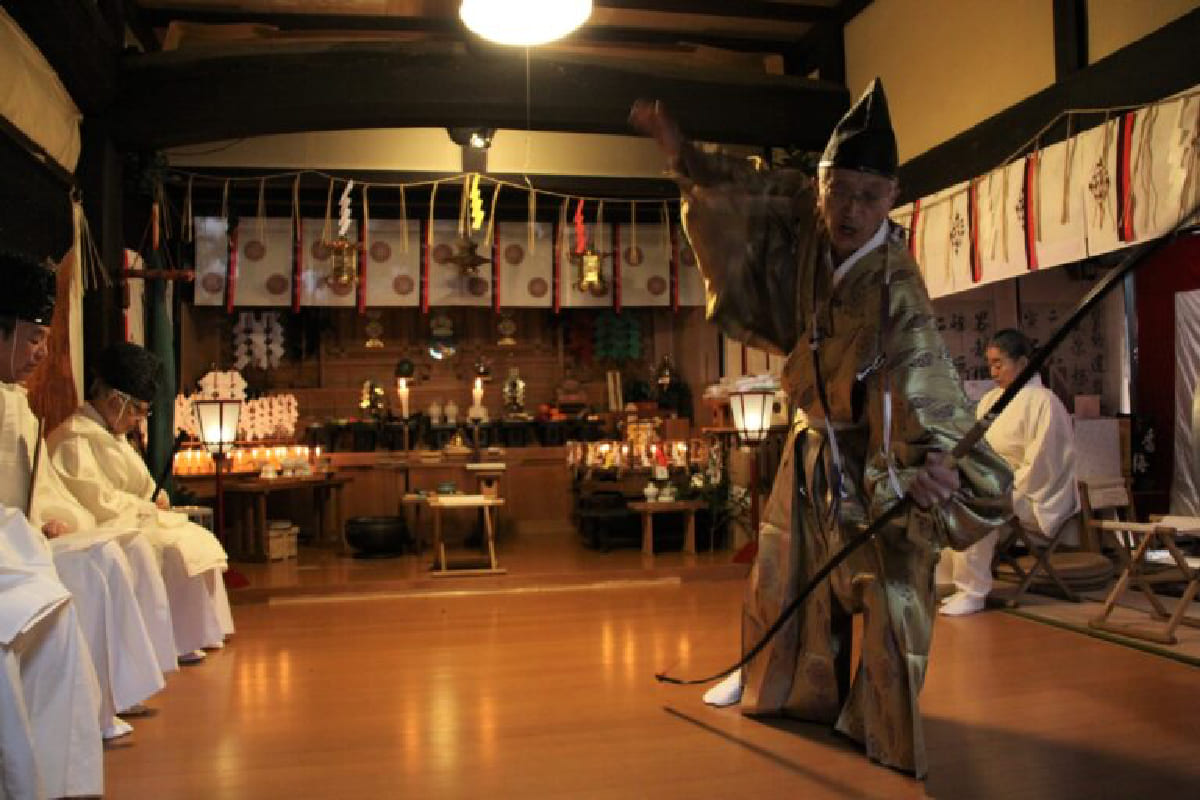
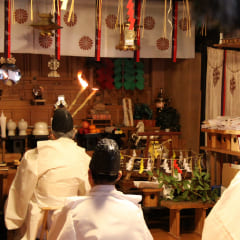
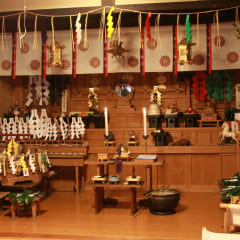
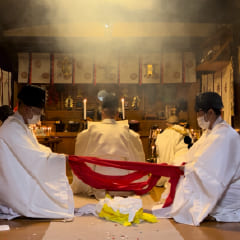
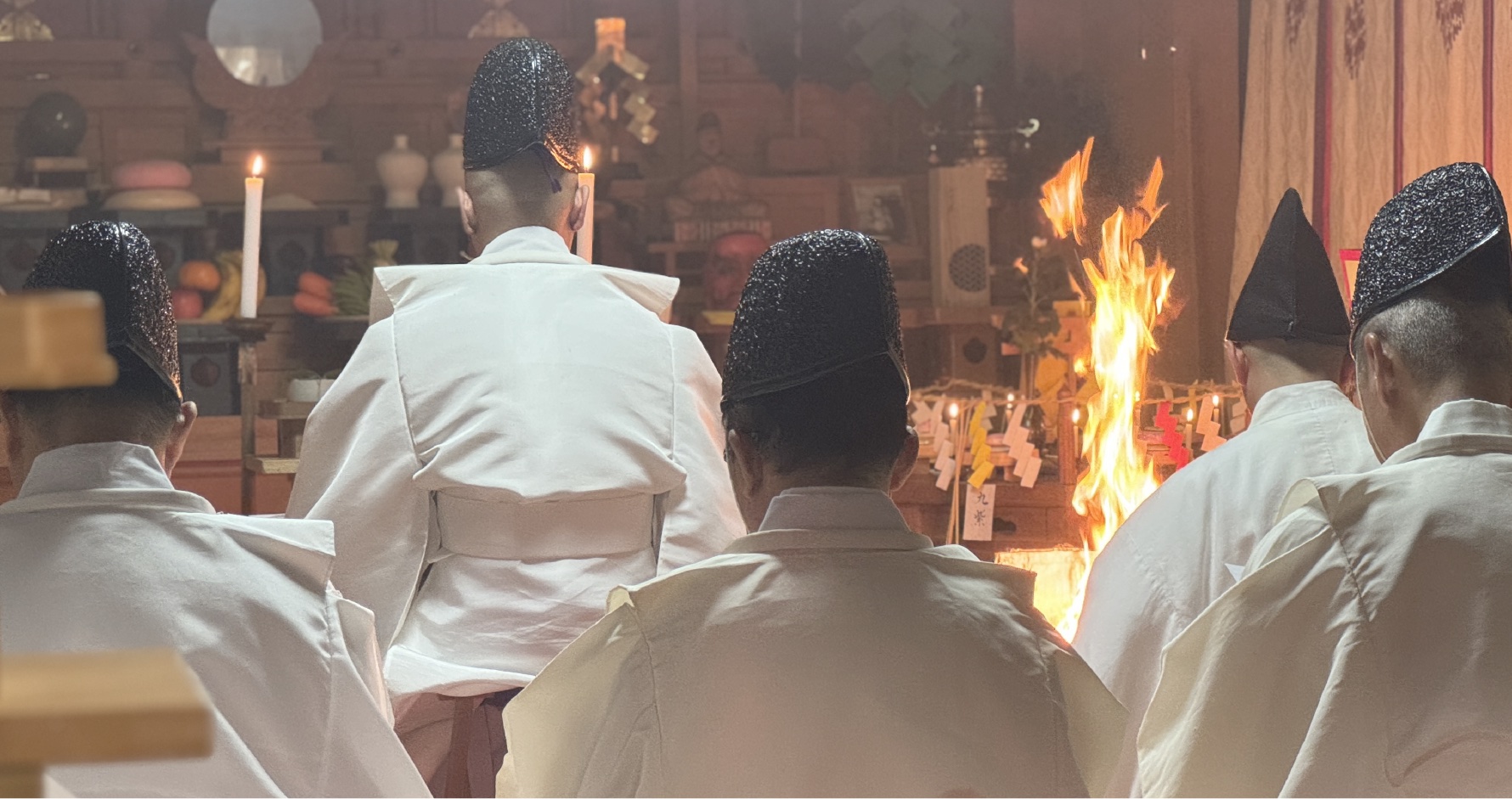
The Star Festival of Tensha Shrine has a history of more than a thousand years. Its origin lies in the Honmyo Zokusei-sai (本命属星祭), one of the rites of Taizan Fukun transmitted within the Onmyoryo, the imperial bureau of yin-yang divination.
This was one of the most highly regarded rites of Onmyodo. Tradition holds that during the Heian period its esoteric procedures were further established by Abe no Seimei, who had deeply mastered the principles of Taiitsu, yin and yang, and the Five Phases.
The rite enshrines Taizan Fukun—the principal deity of Onmyodo, identified with Taiitsu—and offers prayers to the stellar deities abiding in the Ziwei Palace. It embodies the heart of faith in Taiitsu.
Every person receives a natal star according to the year of birth. This star is deeply connected with the root of one’s life. As it moves through the calendar year by year, it comes into relation with the qi of Heaven and Earth.
At times these influences are harmonious; at other times they may be in conflict. When the natal star loses its proper repose, harmony of body and mind may be disturbed, giving rise to unforeseen misfortune, illness, uncertainty or stagnation.
Offering prayers to the deities of Heaven, looking to the divine virtue of Taiitsu and restoring the natal star to its original repose is called kikon (帰魂), “the return of the spirit,” in Onmyodo.
The Star Festival is a prayer rite that wards off calamity, restores vigor to the workings of the natal star and guides body and mind toward pure harmony.
Following the principles of the ancient rites, Tensha Shrine solemnly performs the Honmyo Zokusei-sai, praying for the peace of each person’s natal star, the removal of misfortune throughout the year, good fortune and sound health.
Application information for the Star Festival is posted on the Japanese page as the season approaches.
Nagoshi Purification and Hassaku Prayer Festival
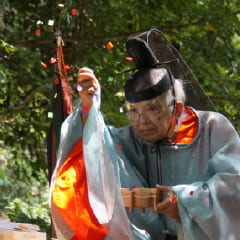
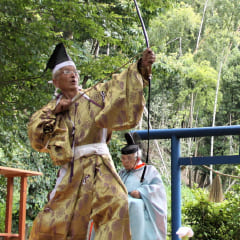
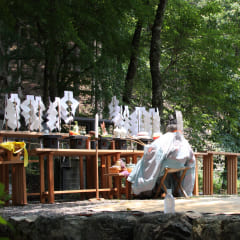
The Nagoshi Purification was originally performed on the last day of the sixth lunar month. At Tensha Shrine, in keeping with the traditional calendar, it is performed together with the Hassaku Prayer Festival on August 1.
In recent years its name has often been written with characters meaning “passing through summer” (夏越), but in older sources it is written Nagoshi (名越), a name that conveys a deeper principle.
The Yakumo Misho, a treatise on poetry by Emperor Juntoku, explains that the name derives from a purification that drives away harmful spirits and calms them. Nagoshi is thus understood as a rite that removes what is harmful or unruly and restores harmony to the qi of Heaven and Earth.
The end of the sixth month is also a threshold at which the qi of summer changes into that of autumn. In the Five Phases, summer corresponds to fire and autumn to metal. Their meeting was traditionally understood as a time when the conflict between fire and metal could disturb the balance of qi.
The Nagoshi Purification is an important rite for cleansing the dangers arising at this seasonal threshold, transferring accumulated faults and impurities to a ritual substitute, and restoring purity to body and spirit.
Passing through the ring of miscanthus reeds (chinowa) is not merely a custom. It is an ancient purification practice intended to restore the circulation of stagnant qi and cleanse away calamity.
The human-shaped paper figure known as a hitogata is also called a katashiro in Onmyodo. It serves as a ritual vessel to which faults, impurities, sources of illness and harmful qi are transferred so that they may be cleansed in place of the person.
Hassaku means the first day of the eighth month, an important threshold before the autumn harvest. After the fiery qi of summer, the qi of Heaven and Earth gradually changes toward the autumnal influence that governs gathering and harvest.
The Hassaku Prayer Festival gives thanks for the blessings of Heaven and Earth and prays for the healthy growth of crops, an abundant harvest and peace in daily life.
Together, the Nagoshi Purification and Hassaku Prayer Festival follow the circulation of qi taught through yin and yang and the Five Phases. They cleanse faults and impurities, purify body and spirit, calm the dangers of the seasonal threshold, and offer prayers for longevity, happiness and a rich harvest.
The 2026 application period for the Nagoshi Purification and Hassaku Prayer Festival has ended. New application information will be added to this language page before the next festival.