

Tensha Shrine


Discerning the qi of Heaven,
perceiving the principles of Earth,
moving in accord with the cycles of the kami.


Amatsu Yashiro no Miya
Heir to the hereditary learning transmitted from Abe no Seimei, Tensha Shrine is the shrine of the head house of Onmyodo, where the kami of the stars in the heavens are reverently enshrined.
We revere Taiitsu, who abides at the source of the kami, as our principal kami, and prepare the Abe no Seimei Calendar according to the methods of our hereditary learning.
-

Shrine Name
In the second year of Tenna (1682), the shrine was granted the honorific title “Tensha-gū” (Tensha Shrine) by imperial decree of Emperor Reigen.
-

Hereditary Learning
Handed down through the generations: the rites and calendar-making transmitted from Abe no Seimei, and the principles of Taiitsu, yin and yang, and the Five Phases.
-

Calendars for Shrines and Temples
Calendars reverently prepared for shrines and temples throughout Japan, centred on Kyoto, including Kasuga Taisha Shrine and Fushimi Inari Taisha.
I. Onmyodo and the Kami of Nature
Onmyodo Alive in Daily Life
Onmyodo may bring to mind a profound learning from the distant past.
Yet we scatter beans at Setsubun, choose auspicious days from the calendar, offer prayers at our first shrine visit of the New Year, and conduct ourselves with care in our yakudoshi years. The wisdom of Onmyodo still lives on quietly in our daily lives.
Onmyodo observes the movements of the kami of the stars in the heavens to compile the calendar, and discerns from the cycles of the kami of Earth what is auspicious and inauspicious in times and directions. It is a path of teaching, handed down in Japan since ancient times, which holds that when people live in accord with the cycles of the kami of Heaven and Earth, they can, in keeping with the principles (kotowari) of this world, naturally prosper and lead their lives with a peaceful heart.
You, too, live within the cycles of Heaven and Earth.
-
Days of the Week
The sun and the moon, and the five planets named for Fire, Water, Wood, Metal and Earth. The names of the seven luminaries, by which the days of the week are called in Japanese, carry an ancient view of the world that joins the heavenly bodies with yin and yang and the Five Phases.

-
Hatsumode
Hatsumode, the first visit of the year to a shrine or temple, brings together customs such as toshigomori (keeping vigil at a shrine at the turn of the year) and ehō-mairi (visiting a shrine in the direction of the year’s ehō). The ehō, which shows the direction in which the kami Toshitokujin abides in a given year, has also been handed down through the calendars of Onmyodo.

-
Yakudoshi
A yakudoshi is a year at a turning point in life when one conducts oneself with care, has misfortune purified away, and prepares for the steps ahead. At our shrine, we reverently look up to the kami of the stars in the heavens, and before them we carry on to this day the purification for yakudoshi and kyōnen (years of ill fortune).

-
Divination (Bokusen)
Divination is the reading of the principle (kotowari) of Heaven. It is the method, founded on the principles of Taiitsu, yin and yang, and the Five Phases, of inquiring of Heaven how matters will unfold and reading the signs in which the workings of the kami have appeared.

Knowing the Workings of the Kami of Nature
The sun and the moon, the stars, the turning of the seasons. Our lives unfold within the workings of the kami of nature.
Consider Amaterasu Ōmikami, the kami of the sun. The light of the sun shines over all of Heaven and Earth, warms our lives, and nurtures plants and crops. Though the form of the kami cannot be seen, their workings already appear in our daily lives, and we feel them every day.
A heart that cherishes nature leads directly to a heart that reveres the kami.
Onmyodo is a learning that explains these cycles and workings of the myriad kami through yin and yang and the Five Phases of Wood, Fire, Earth, Metal and Water. These principles (kotowari) of yin and yang and the Five Phases lie at the foundation of the Eastern thought handed down in China and many other countries of Asia, and of Japanese Shinto.
II. What Is “Fortune”?
“Good Fortune” and “Fortune Comes Around”
Fortune: a word we speak without a second thought.
Fortune is the alignment, at any given time, between a person and the cycles of the kami of Heaven and Earth.
Good fortune means that a person is in accord with the cycles of the kami of Heaven and Earth. Onmyodo holds that when people give thanks for the blessings of the kami of Heaven and Earth and live in keeping with the principle (kotowari) of nature, Taiitsu, they naturally prosper.
The same is true of conduct on auspicious days. For example, Ichiryū Manbaibi is a day for sowing good seeds of unseen virtue, compassion and good deeds that we wish to nurture ten-thousandfold. Sowing good seeds on that day is also conduct in accord with the circulation of divine qi.
The Goseibai Shikimoku states: “The kami gain dignity through people’s reverence, and people gain fortune through the virtue of the kami.” We hold it important to know the blessings we receive from the kami each day, to revere them, and to offer our gratitude and prayers.
In the rites of shrines and temples, the calendar, through which the circulation of the divine qi of Heaven and Earth is known and the dates of rites are set, is of great importance. The Abe no Seimei Calendar prepared by our house is also used at many shrines to set the dates of their rites.
III. Taiitsu and Onmyodo
Taiitsu: The Source of All Kami and All Things
Japan is home to the myriad kami. When we trace these kami back, we come to a single source.
From before Heaven and Earth were divided, before yin and yang had arisen, there has abided the one principle (kotowari). Abiding at the origin of all things, this principle bears the sacred name Taiitsu. This sacred name is also written in large characters on banners raised at the time of the Shikinen Sengu, the periodic renewal of Ise Jingu.
In the heavens, Taiitsu appears in the sacred form of the North Star and the Big Dipper, and marks the passage of time through the circling of the Dipper.
From Taiitsu arise yin and yang, and from yin and yang arise the Five Phases of Wood, Fire, Earth, Metal and Water. In the heavens, the Five Phases become the five planets Jupiter, Mars, Saturn, Venus and Mercury; on the earth, they become five kinds of qi that circulate through the land, move the seasons on, nurture all things, and appear as the workings of the myriad kami.
Tensha Shrine is a shrine where the kami of the stars in the heavens are reverently enshrined.
Respectfully inscribed by 荒木田武邦, Negi (priest) of Kotai Jingu (the Inner Shrine of Ise), descendant of 天見通命
-
Taiitsu
 The North Star and the Big Dipper
-
Yin (Earth)
 Yang (Heaven)

-
The Five Phases


 The planets of the Five Phases
吐普加身依身多女
(Tohokami Emitame) -
The Twelve Earthly Branches
 The workings of the myriad kami are divided into twelve by times and directions.
The twelve earthly branches are kami who show forth the cycles of life.
We teach that the ten stems and twelve branches and the Nine Stars are all sho (signs) of the Eight Trigrams. 坎艮震巽離坤兌乾
(Kangon Shinson Rikon Daken) - FortuneThe alignment between the kami of Heaven and Earth and people
- Sho (Signs)Signs of good and ill fortune, in which the cycles appear in visible form
- CalendarA record of the sho (signs) and the su (numbers)
- Shrines and TemplesPerforming rites in accordance with the principles of the kami of Heaven and Earth
The circulation of the qi of the myriad kami, beginning with the kami of the stars in the heavens, takes visible form, as in the passing of the seasons; what appears in this way is called sho (signs).
This circulation, divided by time and direction and counted, is called su (numbers).
The calendar is a record of these signs and numbers.
The Abe no Seimei Calendar discerns, from these signs and numbers, the cycles of the principles (kotowari) of the kami, and compiles them as a guide.
The kami of Heaven, the kami of Earth, and humankind.
Heaven, Earth and humankind are joined as one.
IV. The Abe no Seimei Calendar
A Calendar Recording the Cycles of the Kami of Heaven and Earth
The Abe no Seimei Calendar is a chart of the year, tracing the movements of the kami of Heaven and Earth, and a guide that lights the path of each day. It records the ehō (auspicious direction) of the year, the turning points of the seasons, and the good and ill fortune and directions of each day.
At our shrine, we prepare the Abe no Seimei Calendar according to the methods of the hereditary learning transmitted from Abe no Seimei. Its calendrical rules, selection of days and interpretation of good and ill fortune are based on the hereditary learning handed down at our shrine, and differ in some respects from ordinary calendars.
The Abe no Seimei Calendar comes in two forms: the Honreki and the Fortune Calendar. The Honreki records the daily sexagenary cycle, selected-day indicators, directions and the progression of the seasons. The Fortune Calendar adds to the Honreki a guide for each month for each honmei star (your birth-year star among the Nine Stars).
So that you may use the calendar in your daily life, we explain the meaning of the words and marks it contains in “How to Read the Calendar.”
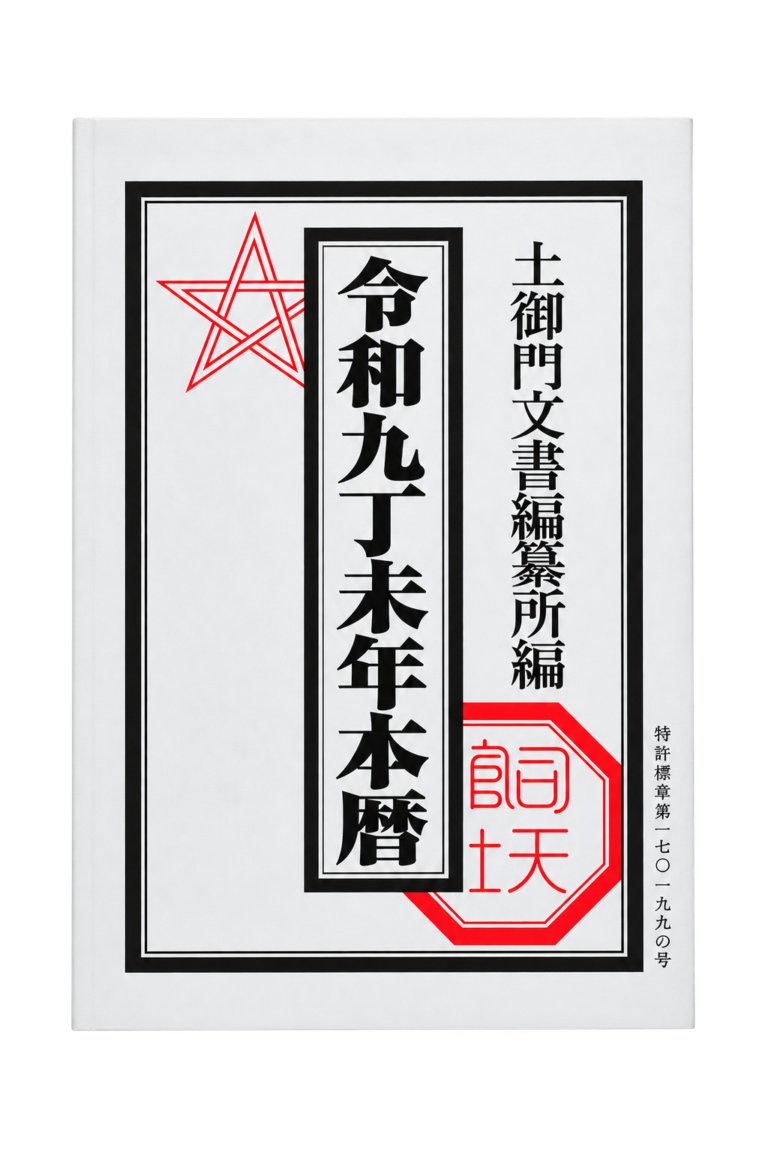
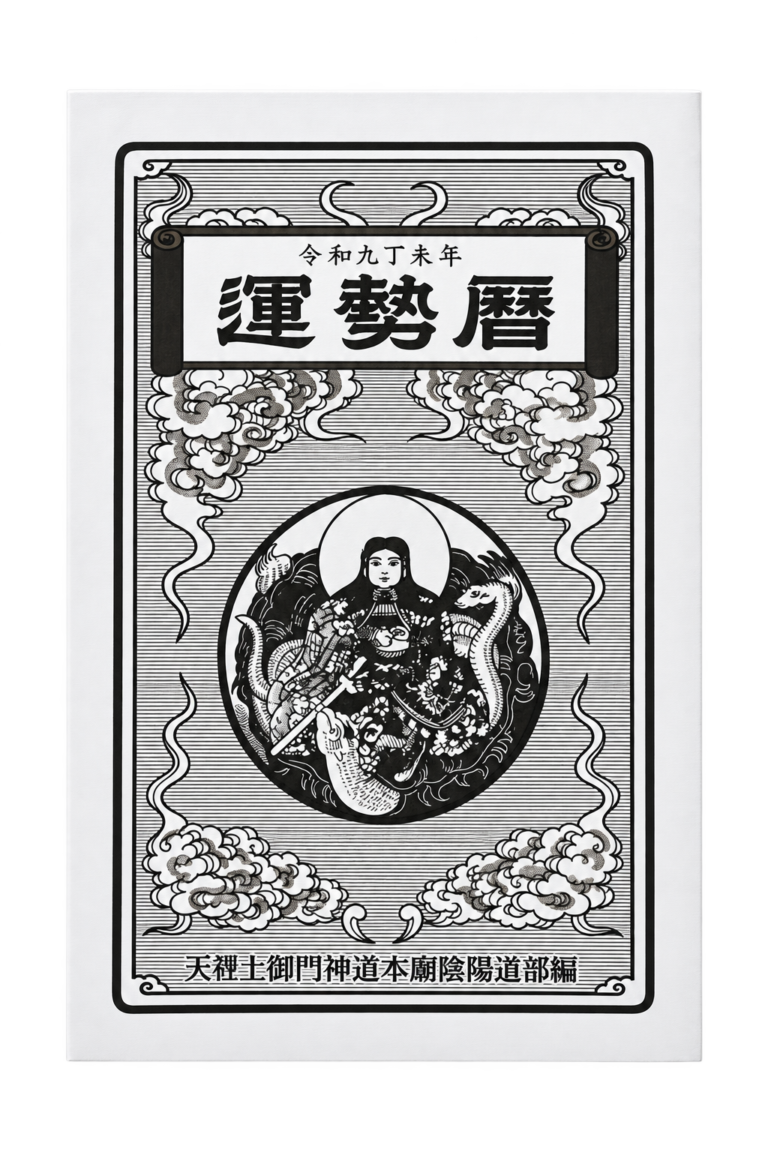
May Be Received at Shrines and Temples Throughout Japan, Centred on Kyoto
The Abe no Seimei Calendar is kindly offered at the distribution offices of the shrines and temples to which we present it, as the calendar of each shrine or temple.
Here we introduce some of them.
- Nara Prefecture Kasuga Taisha Shrine A grand shrine in the sacred precincts of Mount Mikasa, representing the ancient capital of Nara.
- Kyoto Prefecture Fushimi Inari Taisha A grand shrine on Mount Inari at the heart of Inari worship throughout Japan.
- Kyoto Prefecture Kifune Shrine A shrine venerating the deity of water and passing on reverence for the source of life.
- Kyoto Prefecture Sanjusangen-do Temple The main hall of Rengeo-in in Kyoto, renowned for its one thousand statues of Thousand-armed Kannon.
- Kyoto Prefecture Heian Jingu Shrine A shrine commemorating the relocation of the capital to Heian-kyo and cherished by the people of Kyoto.
- Kyoto Prefecture Seimei Shrine, Kyoto A Kyoto shrine venerating Abe no Seimei, revered for prayers and protection from misfortune.
- Shiga Prefecture Hiyoshi Taisha Shrine A grand shrine of Sanno worship at the foot of Mount Hiei, revered for protection from unlucky directions and misfortune.
- Shizuoka Prefecture Mishima Taisha Shrine An ancient shrine revered as the foremost shrine of Izu Province and associated with Minamoto no Yoritomo.
- Nara Prefecture Isonokami Jingu Shrine An ancient shrine in Furu, Yamato, preserving the tradition of worship associated with sacred swords.
- Yamagata Prefecture Dewa Sanzan Shrine A shrine preserving the mountain faith of Mount Haguro, Mount Gassan and Mount Yudono.
- Kyoto Prefecture Kurama-dera Temple The head temple of Kurama Kokyo, preserving a path of prayer and ascetic practice on Mount Kurama.
- Osaka Prefecture Abeno Oji Shrine An Osaka shrine on the Kumano Kaido associated with the historic Kumano Ninety-nine Oji.
- Nara Prefecture Abe Monju-in Temple An ancient temple associated with the Abe clan, with the National Treasure Monju Bosatsu as its principal image.
- Kyoto Prefecture Kyoto Daijingu Shrine A shrine of Ise faith preserving the tradition of worshipping Ise Jingu from Kyoto.
- Kyoto Prefecture Kyoto Ebisu Shrine Kyoto’s beloved “Ebessan,” revered in Ebisu worship for prosperity in business.
- Osaka Prefecture Gasshu Shrine A community shrine in Sakai preserving the Kagura lion procession of its summer festival.
- Hyogo Prefecture Ichi Shrine An ancient shrine in Hikami, Tamba City, held in deep reverence throughout western Tamba.
- Osaka Prefecture Ibaraki Shrine The guardian shrine of Ibaraki, preserving the community’s festivals and faith.
- Kyoto Prefecture Nyakuichi Shrine A shrine on the former site of Nishi-Hachijo Palace, associated with Taira no Kiyomori, where Nyakuichi Oji is enshrined.
- Osaka Prefecture Hontaki-ji Temple A temple on Mount Nose Myoken preserving traditions of prayer, waterfall austerities and temple lodging.
- Hakusan Shrine A shrine carrying on the Hakusan faith and revered as the guardian shrine of its community.
- Fukui Prefecture Jingu-ji Temple An ancient temple associated with the union of Shinto and Buddhism, preserving the water-sending rite that links Wakasa and Nara.
- Nara Prefecture Tenkawa Daibenzaiten Shrine The principal sanctuary of Omine, venerating Benzaiten and preserving faith connected with the performing arts and water.
- Jinja Honkyo We present the calendar to its affiliated shrines, including Kifune Shrine, for use in Shinto rites.

The kami gain dignity through people’s reverence,
and people gain fortune through the virtue of the kami.
-
Shrine Office Amulets, Talismans and Calendars

-
Enshrined Deities and History The kami enshrined at our shrine, and its history

-
Tsuchimikado Calendar and Archives Institute The calendar, a guide for walking with the kami

-
Prayer Service Prayers offered on the night of the full moon

-
Purification Rite (Gejo-no-gi) A purification performed on the day of the new moon

-
Rituals and Festivals Star Festival (Hoshi Matsuri), Nagoshi Purification and Hassaku Prayer Festival

-
Visiting Tensha Shrine Location, shamusho (shrine reception office) and access

-
Tendan Four-Direction Torii Reconstruction A request for offerings of support (hosan)

